

Root Canal Treatment in Sanger
What Is a Root Canal?
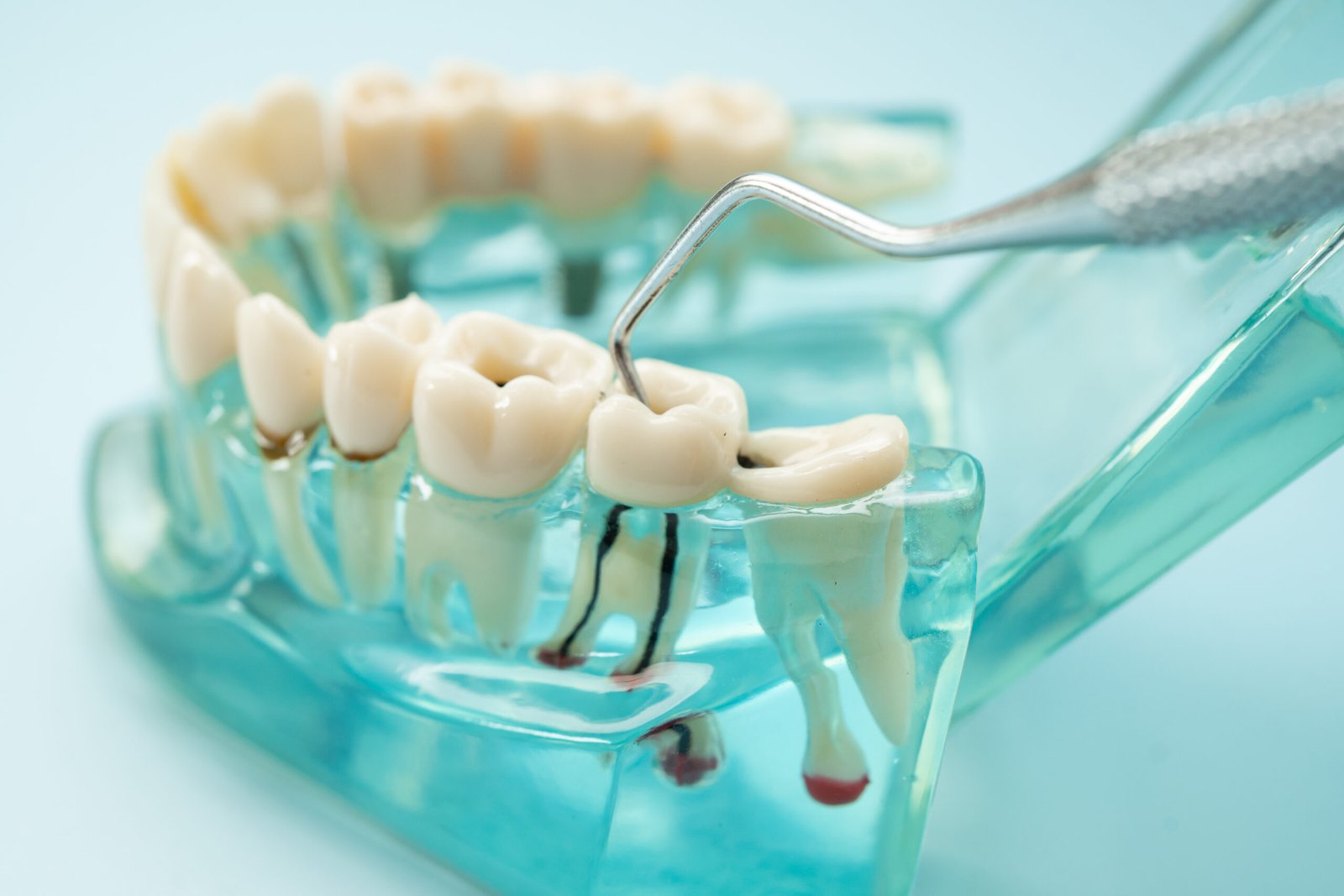
Inside every tooth is a soft core called the pulp, made of nerves and blood vessels. It runs down through thin channels in the roots. If deep decay, a crack or an injury lets bacteria reach the pulp, it gets inflamed or infected. That’s often the source of a throbbing toothache.
Root canal treatment removes the damaged pulp, cleans and disinfects the inside of the tooth, then fills and seals it. The tooth no longer has a live nerve, but it stays in your mouth and keeps working.
Signs You May Need a Root Canal
- A toothache that throbs or keeps you up at night
- Lingering pain after hot or cold (it doesn’t fade within seconds)
- Pain when biting or touching the tooth
- Swelling in the gum or face
- A small pimple-like bump on the gum
- A tooth that has turned darker
Sometimes there are no symptoms at all, and the problem shows up on an x-ray. If you notice any of these, call us. Waiting usually makes it worse.
How Root Canal Treatment Works
- Diagnosis. We take x-rays and, when helpful, a 3D cone beam scan to see the shape of the roots and the extent of the infection.
- Numbing. The tooth and surrounding area are fully numbed with local anesthetic.
- Cleaning. A small opening is made in the top of the tooth. The infected pulp is removed, and the canals are cleaned and shaped with fine rotary instruments.
- Filling and sealing. The canals are filled with a rubber-like material and sealed. A temporary filling closes the opening.
- Protecting the tooth. Most back teeth need a crown afterward to keep them from cracking. Ask about a same-day CEREC crown.
Many root canals are done in one visit; some infected teeth need two.
Why Save the Tooth?
Pulling a tooth can seem simpler, but then you have a gap to deal with, and replacing it with an implant or bridge usually costs more than a root canal and crown. Keeping your natural tooth keeps your bite stable and your bone healthy.
After Your Root Canal
- The tooth may be tender for a few days. Over-the-counter pain relievers usually help.
- Avoid chewing hard foods on that side until the permanent crown or filling is in place.
- Keep the crown appointment. A tooth with only a temporary filling can crack or leak.
- Brush and floss normally. A treated tooth can still get decay around the edges.
FAQs
Does a root canal hurt?
The procedure itself shouldn’t, because the tooth is fully numbed. Most people feel much better afterward, since the infected nerve was causing the pain.
How long does it take?
Usually one or two visits of about an hour to an hour and a half each.
How long does a root canal last?
With a good crown and regular care, a treated tooth can last for many years, often a lifetime.
Do antibiotics fix a tooth infection?
They can calm a spreading infection for a while, but they can’t reach inside the tooth. The infection comes back unless the tooth is treated or removed.
Do you do root canals here or refer them out?
Dr. Kumar treats many root canals in our office. Teeth with very complex roots may be referred to an endodontist (a root canal specialist), and we’ll let you know if that’s the case.
Don't Wait on a Toothache
Call (559) 643-2129. The sooner we treat it, the better the chance of saving the tooth.
Client Case
Treatment Plan
- Alleviate symptoms of depression and burnout.
- Enhance coping skills for managing work-related stressors and life transitions.
- Cognitive-behavioral therapy (CBT) to challenge negative thought patterns and develop adaptive coping strategies.
- Career counseling to explore work-life balance and identify sources of fulfillment outside of work.
Results
- John successfully transitioned from feeling overwhelmed and hopeless to experiencing a renewed sense of purpose and fulfillment in both his personal and professional life.
- He developed effective coping strategies to manage stressors and maintain his mental health, leading to improved productivity and job satisfaction.
- John's case highlights the transformative power of therapy in promoting resilience and well-being, ultimately enhancing his overall quality of life.

Contact Information
Office Hours
Tuesday & Thursday: 9 AM – 6 PM
Saturday: 9 AM – 3 PM
Other Days: By Appointment
2020 Jensen Avenue,
Sanger, CA 93657