

Dental Bone Grafting

Why Bone Shrinks After a Tooth Is Lost
Your jawbone stays strong because the roots of your teeth stimulate it every time you chew. When a tooth is lost, the bone in that spot starts to shrink. Much of that loss happens in the first year. Over time, it can leave too little bone for an implant and change the shape of your face.
What Is a Bone Graft?
A bone graft places bone material where bone is missing. Over the next few months, your body uses it as a scaffold and grows new bone in its place. Graft material can come from a donor source, an animal source, a synthetic material or, less commonly, your own bone. Dr. Kumar will explain which he’d use and why.
Common Types of Grafts
- Socket preservation: placed right after an extraction to keep the site from collapsing.
- Ridge augmentation: builds up the width or height of the jaw where bone has already shrunk.
- Sinus lift: adds bone under the sinus in the upper back jaw so an implant can be placed.
The Procedure
- Planning with a 3D cone beam scan.
- Numbing the area with local anesthetic.
- Placing the graft through a small opening in the gum, often covered with a protective membrane.
- Closing the gum with stitches.
- Healing for several months before an implant is placed.
Recovery
- Most patients report mild discomfort, usually managed with over-the-counter pain relievers such as ibuprofen.
- Some swelling and bruising is normal for a few days.
- Eat soft foods and avoid chewing on the graft site.
- Don’t smoke; it slows healing.
- You may notice small granules in your mouth for a few days. That’s normal.
FAQs
How long before I can get an implant?
Usually several months, depending on the size of the graft. Small grafts placed at the time of extraction sometimes heal faster.
Does a bone graft hurt?
The area is numbed during the procedure. Afterward, most people describe soreness rather than pain.
Do I always need a graft for an implant?
No. Many people have enough bone. Your 3D scan will show whether a graft is needed.
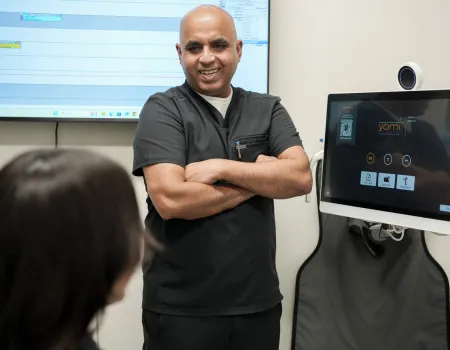
Thinking About an Implant?
Find out if you have enough bone, and what to do if you don't.
Client Case
Treatment Plan
- Alleviate symptoms of depression and burnout.
- Enhance coping skills for managing work-related stressors and life transitions.
- Cognitive-behavioral therapy (CBT) to challenge negative thought patterns and develop adaptive coping strategies.
- Career counseling to explore work-life balance and identify sources of fulfillment outside of work.
Results
- John successfully transitioned from feeling overwhelmed and hopeless to experiencing a renewed sense of purpose and fulfillment in both his personal and professional life.
- He developed effective coping strategies to manage stressors and maintain his mental health, leading to improved productivity and job satisfaction.
- John's case highlights the transformative power of therapy in promoting resilience and well-being, ultimately enhancing his overall quality of life.

Contact Information
Office Hours
Tuesday & Thursday: 9 AM – 6 PM
Saturday: 9 AM – 3 PM
Other Days: By Appointment
2020 Jensen Avenue,
Sanger, CA 93657